Jon Kabat-Zinn's Mindfulness-Based Stress Reduction and Full Catastrophe Living
🗂️ Interactive Notebook: Open Study Companion (Video Summary, Flashcards, Mind Map) ↗
This master monograph consolidates Jon Kabat-Zinn and Jon Kabat-Zinn-Full Catastrophe Living into an exhaustive, transdisciplinary study of Mindfulness-Based Stress Reduction (MBSR), the clinical phenomenology of Full Catastrophe Living (1990, 2013), contemplative neuroscience, the seven attitudinal foundations, stress physiology, and the contemporary sociopolitical debates surrounding McMindfulness and institutional co-optation. It eliminates duplicated biographical sketches, harmonizes the 8-week curriculum and attitudinal pillars, unifies clinical pain and neuroscience trials, and contextualizes Kabat-Zinn's secularization of Buddhist Vipassanā and Zen within modern medicine, cybernetic systems biology, and the attention economy.
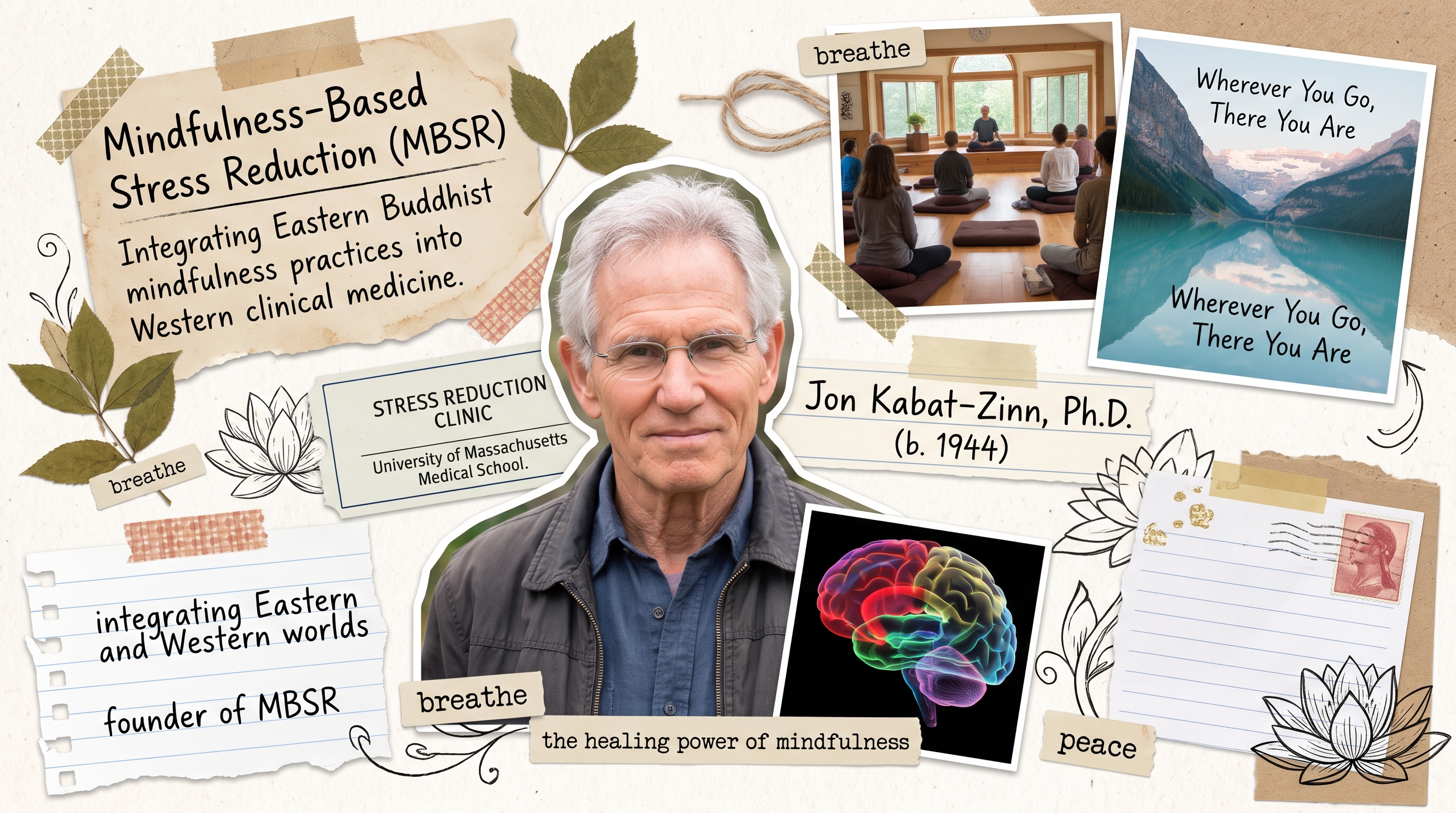
In 1979, molecular biologist Jon Kabat-Zinn executed one of the most consequential clinical and cultural translations of the modern era: extracting early Buddhist insight meditation (vipassanā), Zen non-striving, and Hatha yoga from their traditional religious matrices to formulate Mindfulness-Based Stress Reduction (MBSR) at the University of Massachusetts Medical Center.[1][2] Operationalizing mindfulness as "paying attention in a particular way: on purpose, in the present moment, and nonjudgmentally," Kabat-Zinn constructed an empirical bridge between ancient contemplative phenomenology and modern behavioral medicine.[1:1][3]
Across his foundational 1990 clinical treatise, Full Catastrophe Living (comprehensively revised and expanded in 2013), Kabat-Zinn reclaims Nikos Kazantzakis's phrase "the full catastrophe" not as a synonym for disaster, but as the poignant, chaotic, and poignant totality of human embodiment—where joy, intimacy, and vitality coexist inextricably with physical pain, degenerative illness, time pressure, and mortality.[1:2][4] Rather than promising the eradication of symptoms, MBSR provides a systematic methodology for decoupling primary sensory nociception from secondary cognitive-affective elaboration (the mental "storyline"), transforming the organism's relationship to suffering.[1:3][5]
Grounded in cybernetic systems theory, psychoneuroimmunology (PNI), and contemplative neuroscience, MBSR demonstrates that mental training produces measurable biological restructuring: downregulating hyperactive midline hubs of the Default Mode Network (DMN), inducing a left-anterior prefrontal shift associated with positive affect, shrinking the stress-reactive amygdala, bolstering immune titers, and preserving telomere length.[5:1][6][7][8] While MBSR catalyzed third-wave cognitive behavioral therapies (MBCT, ACT, DBT) and a global wellness movement, it simultaneously provoked intense sociopolitical critique regarding "McMindfulness"—the danger of severing contemplative techniques from ethical constraints (śīla) to pacify corporate laborers under systemic stress.[9][10]
1. Intellectual Biography, Contemplative Genealogy & The UMass Epiphany
To comprehend the philosophical and methodological architecture of Mindfulness-Based Stress Reduction, one must trace Kabat-Zinn’s dual pedigree in twentieth-century biomedical science and Asian contemplative traditions.[1:4][2:1]
The Dual Inheritance: Molecular Biology and Contemplative Practice
Jon Kabat-Zinn was born in New York City in 1944 into a family that embodied the complementary union of empirical rationalism and aesthetic sensitivity.[1:5] His father, Elvin Kabat, was a world-renowned immunochemist and biomedical pioneer at Columbia University; his mother, Sally Kabat, was an accomplished visual artist.[1:6] This early immersion instilled in Kabat-Zinn an enduring conviction that objective scientific rigor and qualitative, subjective human experience are not mutually exclusive, but profoundly interdependent.[1:7]
- Academic Trajectory: Kabat-Zinn completed his undergraduate degree in chemistry at Haverford College in 1965, followed by doctoral research in molecular biology at the Massachusetts Institute of Technology (MIT), earning his Ph.D. in 1971 under the mentorship of Nobel Laureate Salvador Luria.[1:8]
- The 1966 Contemplative Awakening: While immersed in heavy molecular biology laboratories at MIT, Kabat-Zinn attended a campus lecture delivered by Philip Kapleau, an American Zen missionary and author of The Three Pillars of Zen.[2:2] The lecture profoundly disrupted his mechanistic worldview, igniting a lifelong daily commitment to Zen meditation and Hatha yoga.[1:9][2:3]
- Lineage Apprenticeships: Over the subsequent two decades, Kabat-Zinn studied intensively under seminal teachers of the twentieth-century Eastern diaspora:
- Zen Buddhism: Trained under Korean Zen Master Seung Sahn (founder of the Providence Zen Center), absorbing the radical orientation of "don't-know mind" and non-striving presence.[2:4]
- Engaged Dharma: Practiced with Vietnamese Zen monk Thich Nhat Hanh, observing how deep contemplative stillness could be mobilized directly for social peace and interpersonal reconciliation.[2:5]
- American Vipassanā: Attended intensive silent retreats at the Insight Meditation Society (IMS) in Barre, Massachusetts, studying classical Satipaṭṭhāna and bare attention under Joseph Goldstein and Jack Kornfield.[2:6]
The 1979 Retreat Vision: Secularizing the Dharma
In the spring of 1979, during an intensive two-week silent Vipassanā retreat at the Insight Meditation Society, Kabat-Zinn experienced an intellectual and moral epiphany regarding the crisis of modern healthcare.[2:7] In clinical medicine, patients suffering from intractable chronic pain, autoimmune flare-ups, cardiovascular disease, and terminal diagnoses were routinely told by frustrated physicians: "There is nothing more medicine can do for you; you just have to learn to live with it."[1:10][3:1] Yet no physician ever taught patients how to live with it.[1:11]
Kabat-Zinn perceived that the core phenomenological tools of the Buddhist tradition—specifically the four foundations of mindfulness (satipaṭṭhāna), sensory deconstruction, and non-judgmental awareness—provided the exact operational manual that modern healthcare lacked.[2:8][11] However, he recognized an insurmountable sociological barrier: if mindfulness was presented in Buddhist robes, chanting in Pāli, or encumbered by Asian cosmological dogmas (karma, rebirth, monastic asceticism), it would be reflexively rejected by Western hospital administrators, physicians, and ordinary patients.[2:9][12]
Kabat-Zinn formulated a bold translational hypothesis: the transformative mechanics of Dharma contemplation are not inherently religious, but represent universal human capacities for attention regulation, metacognition, and somatic integration.[2:10] By systematically stripping away Buddhist cultural vestments, sectarian terminology, and Asian scholasticism, the practice could be naturalized within hospital basements as an intensive behavioral medicine curriculum.[2:11]
In the autumn of 1979, Kabat-Zinn founded the Stress Reduction Clinic at the University of Massachusetts Medical School, inaugurating an experimental outpatient program that evolved into the Mindfulness-Based Stress Reduction (MBSR) curriculum.[1:12][3:2]
Operationalizing Mindfulness
To establish empirical credibility within clinical medicine, Kabat-Zinn drafted an operational definition that displaced vague mystical notions of meditation, providing cognitive science with a standardized behavioral metric:[1:13][3:3]
"Mindfulness means paying attention in a particular way: on purpose, in the present moment, and nonjudgmentally." — Jon Kabat-Zinn (1994)[3:4]
This definition decomposes mindfulness into three precise cognitive vectors:
- Intention ("On Purpose"): Volitional, conscious direction of attentional resources, moving the mind out of the reactive, involuntary daydreaming of the default state.[1:14][3:5]
- Temporal Locus ("In the Present Moment"): Anchoring awareness strictly within the sensory immediacy of the unfolding "now," suspending compulsive mental time travel into past rumination or future anxiety.[1:15][13]
- Attitudinal Stance ("Nonjudgmentally"): Assuming the posture of an impartial, compassionate witness, suspending habitual cognitive habits of evaluative labeling (good vs. bad, pleasant vs. unpleasant, right vs. wrong).[1:16][14]
2. The Core Attitudinal Foundations & Philosophical Architecture
In Full Catastrophe Living, Kabat-Zinn emphasizes that mindfulness is not a mechanical attentional trick or a cold sensory discipline; it is an integrated ethical, psychological, and somatic posture toward reality.[1:17] Techniques like the Body Scan or breath monitoring fail if they are practiced with an attitude of aggression, self-criticism, or impatient striving.[1:18]
To protect the practice from degenerating into cold calculation, Kabat-Zinn formulated Seven Foundational Attitudes (expanded in the 2013 revised edition to include gratitude and generosity) that must be cultivated simultaneously alongside formal meditation.[1:19][15]
The Attitudinal Foundations Matrix
| Attitudinal Pillar | Operational Definition in MBSR | Cognitive & Psychological Mechanism | Clinical Utility & Pathology Addressed | Philosophical & Contemplative Counterpart |
|---|---|---|---|---|
| 1. Non-Judging | Assuming the stance of an impartial, unattached witness to ongoing experience.[1:20] | Decentering from automated evaluative filters; interrupting spontaneous positive/negative valence tagging.[1:21][14:1] | Dismantles chronic self-condemnation, depressive shame, and anxious catastrophic forecasting.[1:22] | Upekkhā (Buddhist equanimity); deconstruction of evaluative categorization. |
| 2. Patience | Understanding and honoring the organic, natural tempo of biological and psychic growth.[1:23] | Resisting the urge to accelerate healing or eliminate discomfort through sheer willpower.[1:24] | Counteracts modern "time sickness", urgency addiction, and intolerance of physical rehabilitation.[1:25][16] | Khanti (Pāli patience/forbearance); Daoist Wu Wei (effortless action aligned with nature). |
| 3. Beginner's Mind | A willingness to experience each moment as if encountering it for the very first time.[1:26] | Inhibiting top-down predictive heuristics; reopening the sensorium to direct bottom-up data.[1:27][17] | Prevents chronic pain patients from viewing their bodies through calcified, despairing labels.[1:28] | Shoshin (Zen beginner's mind, Shunryu Suzuki); phenomenological epochē (Husserl). |
| 4. Trust | Developing fundamental confidence in oneself, one's somatic intuition, and organismic wisdom.[1:29] | Shifting authority from external medical experts and gurus to one's own visceral feedback loops.[1:30] | Eliminates chronic hypochondriacal panic, somatic alienation, and dependency on allopathic fixes.[1:31] | Saddhā (experientially grounded trust); Carl Rogers' organismic valuing process. |
| 5. Non-Striving | Stepping entirely out of the goal-oriented "doing mode" into receptive "being mode."[1:32] | Halting the computational calculation of discrepancies between current state and desired state.[1:33][18] | Resolves the healing paradox: striving to eliminate pain paradoxically amplifies neurological tension.[1:34] | The radical non-striving of contemporary non-duality; Advaita sahaja. |
| 6. Acceptance | Seeing and acknowledging things exactly as they are in the present without denial or defense.[1:35] | Extinguishing cognitive avoidance; ceasing the exhausting war against unavoidable reality.[1:36] | Serves as the indispensable springboard for constructive action; acceptance is not resignation.[1:37] | Yathābhūta-ñāṇadassana (seeing things as they actually are); Camusian absurd defiance. |
| 7. Letting Go | Relinquishing the compulsive mental reflex to grasp pleasant states or push away unpleasant ones.[1:38] | Decoupling craving (taṇhā) and clinging (upādāna) from incoming affective feeling tones (vedanā).[1:39][11:1] | Breaks addiction loops, ruminative depression, and obsessive grief over lost physical capabilities.[1:40] | Nekkhamma (renunciation/release); deconstructing character armor (Terror Management Theory, Becker's Denial of Death, and Buddhist Contemplation). |
The Paradox of Non-Striving: Shifting from "Doing Mode" to "Being Mode"
The central philosophical paradox of Full Catastrophe Living is the principle of Non-Striving.[1:41]
In modern industrial societies, human behavior is governed almost exclusively by the "doing mode" of mind.[1:42][18:1] The doing mode operates as a goal-driven, discrepancy-monitoring computational program:
- It continuously compares one's current state with an idealized future goal state.
- It calculates the gap between where one is and where one wishes to be.
- It mobilizes mental stamina, muscular tension, and strategic problem-solving to force reality into alignment with desired goals.[1:43][18:2]
While the doing mode is indispensable for building bridges, programming software, or filing taxes, it becomes catastrophic when applied to internal emotional states and chronic physical illness.[1:44][18:3] When a person with chronic pain or anxiety enters doing mode, their mind treats the pain as a mechanical error to be eradicated.[1:45] They strive aggressively to relax, strive to eliminate the headache, or strive to find peace. This very act of striving triggers sympathetic nervous arousal, heightens muscular guarding, and amplifies the perception of failure when symptoms persist, locking the patient into a vicious cycle of agony.[1:46][18:4]
MBSR resolves this trap by teaching patients to step into "being mode":[1:47]
- The practitioner suspends all ambition to alter, improve, or manipulate their experience.[1:48]
- Rather than trying to change a migraine or extinguish anxiety, the individual allows the sensation to exist within the spaciousness of bare awareness.[1:49]
- Paradoxically, when the organism completely ceases to fight, muscular bracing softens, autonomic arousal downregulates, and the body's innate self-regulating mechanisms initiate organic healing.[1:50][18:5]
3. The Standardized MBSR Curriculum: Pedagogical Architecture & Contemplative Mechanics
The clinical efficacy of MBSR derives from its rigorous, standardized curricular format. Over eight consecutive weeks, heterogenous cohorts of patients—suffering from conditions ranging from metastatic cancer and severe spinal injuries to panic disorders and fibromyalgia—undergo intensive cognitive, somatic, and behavioral retraining.[1:51][2:12]
The 8-Week Curriculum Architecture
| Week / Stage | Core Thematic Focus | Formal & Informal Practices Introduced | Cognitive & Behavioral Shift |
|---|---|---|---|
| Orientation & Week 1 | Waking from Automatic Pilot | • The Raisin Exercise (sensory awakening) • The 45-minute Body Scan (supine) • Daily mindful breathing intervals | Moving out of default mental daydreaming; discovering how the mind inhabits thoughts rather than sensory reality.[1:52] |
| Week 2 | Perception and Creative Response | • Daily 45-minute Body Scan • Introduction to Pleasant Events Calendar • Mindful pause during daily routines | Recognizing that subjective cognitive appraisals, rather than objective external events, dictate stress levels.[1:53][17:1] |
| Week 3 | Pleasure and Power in Being Present | • Mindful Hatha Yoga (gentle lying sequence) • Alternating Yoga and Body Scan • Introduction to Unpleasant Events Calendar | Shifting relationship to unpleasant sensations; tracking somatic constriction during emotional reactivity.[1:54] |
| Week 4 | The Development of Concentration | • Sitting Meditation (breath focus, posture) • Fast and slow Walking Meditation • Daily Yoga and Sitting practice | Developing attentional stability (samatha); noticing the five hindrances without identifying with them.[1:55][11:2] |
| Week 5 | Mindful Response vs. Habitual Reaction | • Sitting Meditation (expanding to open sounds) • Investigating physical pain with curiosity • The Mindful Stress Response framework | Identifying the somatic trigger points of fight-or-flight; inserting the metacognitive pause before reacting.[1:56] |
| Week 6 | Interpersonal Mindfulness & Conflict | • Sitting Meditation (thoughts as mental events) • Mindful communication (Aikido model) • Mindful listening in interpersonal disputes | Transforming defensive communication habits (passivity and aggression) into mindful assertiveness.[1:57] |
| All-Day Retreat | The Silent Immersion (Between Wk 6 & 7) | • 7.5 hours of continuous noble silence • Alternating sitting, walking, yoga, body scan • Mindful eating and mountain meditation | Cultivating deep, sustained contemplative abidance; confronting boredom, restlessness, and deep emotion.[1:58] |
| Week 7 | Integration into Daily Rhythms | • Student designs custom 45-minute practice • Mindful consumption (food, media, news) • Awareness of time stress and pacing | Transitioning from structured teacher guidance toward personal autonomy and sustainable daily habits.[1:59] |
| Week 8 | The Rest of Your Life (Sustaining Practice) | • Reviewing the journey; relapse prevention • Formal commitment to lifelong presence • Expanding compassion and loving-kindness | Recognizing that the completion of the 8-week course is not a finish line, but the formal inception of a lifelong craft.[1:60] |
The Three Core Formal Practices
The experiential heart of the MBSR curriculum rests upon three distinct formal practices practiced cyclically for 45 minutes daily, six days a week:[1:61]
1. The Body Scan
Practiced lying flat on the back in the supine posture (śavāsana), the patient is guided to move attentional focus systematically through every region of the body—starting from the toes of the left foot, traveling up the leg, through the pelvis, abdomen, chest, back, arms, neck, and cranial vault.[1:62]
- Somatic Interoception: Unlike cognitive relaxation techniques that rely on guided imagery (e.g., visualizing a warm beach), the Body Scan cultivates pure, non-evaluative sensory contact with whatever sensations actually exist—itching, throbbing, temperature, numbness, or pain.[1:63][19]
- Uncoupling Muscle Bracing: Patients realize that chronic psychological stress causes chronic, subconscious muscular contractions (what Wilhelm Reich and Ernest Becker termed character armor). By breathing into these contracted areas and allowing them to soften, somatic armoring dissolves.[1:64][19:1]
2. Sitting Meditation
Practiced on a meditation cushion (zafu) or upright chair with an erect, dignified spine, sitting meditation begins with focused attention (ānāpānasati) on the physical sensation of the breath at the nostrils or the rising and falling of the abdominal wall.[1:65]
- Once attentional stability is established, the aperture of awareness expands into Open Monitoring (choiceless awareness, or cittānupassanā).[1:66][11:3]
- The practitioner observes physical sensations, environmental acoustic sounds, and mental thoughts arising, lingering, and passing away within awareness, directly operationalizing the principles detailed in The Core Instruction - Turning the Gaze Inward.[1:67]
3. Mindful Hatha Yoga
Comprising slow, gentle stretching, mindful alignment, and posture sequences practiced with deep diaphragmatic breathing.[1:68]
- Designed specifically for clinical populations suffering from chronic orthopedic, cardiovascular, and autoimmune limitations.[1:69]
- Meeting the "Edge": Patients are instructed to move into postures only until they reach their physiological "edge"—the boundary where resistance and sensation begin—and breathe at that threshold without striving to push past it or recoiling in frustration, breaking the psychological pattern of athletic self-punishment.[1:70]
4. The Systems View of Life, Psychoneuroimmunology & The Stress Response
A primary intellectual achievement of Full Catastrophe Living is its integration of twentieth-century biological sciences—specifically cybernetic systems theory, evolutionary biology, and psychoneuroimmunology—into a unified paradigm of human health.[1:71][20]
Healing vs. Curing: The Recovery of Wholeness
Kabat-Zinn executes a radical linguistic and epistemological distinction between curing and healing:[1:72]
| Diagnostic Dimension | Curing (Allopathic Intervention) | Healing (Systemic Contemplative Integration) |
|---|---|---|
| Etymological Root | Latin curare (to care for, manage, remedy a specific defect).[1:73] | Old English hǣlan (from hāl, meaning whole, intact, holy).[1:74] |
| Primary Objective | Complete eradication of physical pathology or elimination of symptoms.[1:75] | Experiencing oneself as fundamentally whole, interconnected, and complete.[1:76] |
| Clinical Locus | Mechanistic and localized: repairing an organ, tumor, or broken bone.[1:77] | Holistic and relational: integrating body, mind, emotion, and environment.[1:78] |
| Possibility Under Terminal Illness | Impossible: when a disease is incurable, allopathic medicine reaches a dead end.[1:79] | Entirely Possible: An individual can achieve profound spiritual and psychological healing on their deathbed.[1:80] |
Drawing on Gestalt Psychology-The Mechanics of the Whole, Kabat-Zinn asserts that an individual is not an assemblage of modular biological parts, but an indivisible wholeness.[1:81] When a patient breaks an ankle or is diagnosed with diabetes, allopathic medicine tends to reduce the person to "the fractured tibia in Room 4" or "the diabetic case."[1:82] MBSR reminds the patient that no matter what is wrong with their physical body, there is vastly more right with them than wrong with them, restoring self-respect and organismic dignity.[1:83]
Cybernetic Systems Theory and Feedback Disconnection
Drawing on cybernetic theorists Gregory Bateson, Norbert Wiener, and physiologist Walter Cannon (who coined homeostasis), Kabat-Zinn models the human organism as an open, dynamic, self-regulating feedback network.[1:84][20:1]
- The Necessity of Feedback: Healthy biological self-regulation depends entirely upon the accurate, uninterrupted flow of information across internal feedback channels.[1:85]
- Pathology as Severed Communication: Chronic stress and disease occur when an organism ignores, suppresses, or severs its own internal feedback loops.[1:86]
- Modern individuals routinely silence physiological distress signals: masking chronic fatigue with caffeine, numbing stress headaches with analgesics, suppressing emotional sorrow with alcohol or workaholism, and ignoring cardiovascular warning signs.[1:87]
- Mindfulness operates as an act of restoring cybernetic feedback.[1:88] By sitting silently and attending to somatic sensations without distraction, the individual re-establishes communication across severed channels, allowing the nervous system to detect imbalances and initiate dynamic self-regulation.[1:89][20:2]
Systematic Comparison: Automatic Stress Reaction vs. Mindful Stress Response
In Part III of Full Catastrophe Living, Kabat-Zinn provides a comprehensive physiological and cognitive dissection of human stress, contrasting the automated, evolutionary reaction with the mindful response:[1:90][21]
| Physiological / Cognitive Axis | The Automatic Stress Reaction (Fight-or-Flight) | The Mindful Stress Response (Decentering & Regulation) |
|---|---|---|
| Evolutionary Root | Ancient mammalian defense protocol engineered for physical survival against predators.[1:91][21:1] | Cortical executive regulation modulating subcortical emotional centers via mindful awareness.[5:2][6:1] |
| Neuroendocrine Trigger | Immediate activation of the SAM (sympathetic-adrenomedullary) and HPA (hypothalamic-pituitary-adrenal) axes.[21:2] | Conscious recognition of visceral arousal, recruiting prefrontal networks to inhibit runaway HPA escalation.[5:3][6:2] |
| Hormonal Output | Massive surge of epinephrine, norepinephrine, and sustained systemic cortisol secretion.[21:3] | Rapid down-regulation of catecholamines; accelerated return of cortisol to homeostatic baseline.[6:3][8:1] |
| Cardiovascular Dynamics | Tachycardia, elevated systolic/diastolic blood pressure, peripheral vasoconstriction.[21:4] | Vagal nerve stimulation, enhanced heart rate variability (HRV), and stabilization of vascular resistance.[6:4] |
| Cognitive Operation | Catastrophic tunnel vision, rigid binary schemas, automated panic, and worst-case scenario simulation.[1:92][17:2] | Broadened attentional aperture, metacognitive decentering, curiosity, and flexible hypothesis-testing.[1:93][17:3] |
| Behavioral Manifestations | Maladaptive coping: aggression, defensive withdrawal, emotional overeating, substance abuse, workaholism.[1:94] | Assertive communication, conscious pacing, purposeful prioritization, and healthy boundary maintenance.[1:95] |
| Long-Term Systemic Consequence | Chronic allostatic load: immune suppression, cardiovascular damage, metabolic disease, and accelerated cellular aging.[21:5] | Autonomic resilience, preserved physiological reserves, tissue repair, and enhanced neuroplasticity.[6:5][8:2] |
5. The Phenomenology of Chronic Pain & Cognitive Decoupling
A defining clinical triumph of Jon Kabat-Zinn's methodology is the treatment of intractable chronic pain.[1:96][5:4] When patients arrive at the MBSR clinic, they are typically trapped in an adversarial, desperate war against their own bodies, exhausted by failed surgical interventions and dependent on escalating pharmaceutical dosages.[1:97]
The Tripartite Anatomy of Pain
Drawing on the classic pain research of Ronald Melzack and Patrick Wall (the Gate Control Theory of pain), Kabat-Zinn demonstrates that the subjective experience of pain is not a simple, monolithic physical event, but a complex composite of three distinct neurobiological dimensions:[1:98][5:5]
- Sensory-Discriminative Dimension (Primary Nociception): The raw afferent electrical impulses transmitted from peripheral nerve endings through the spinal cord to the somatosensory cortex, registering pure spatial, temporal, and thermal data (intensity, location, duration).[1:99][5:6]
- Affective-Motivational Dimension (Secondary Suffering): The subjective unpleasantness, emotional distress, alarm, and visceral aversion generated when the limbic system (specifically the amygdala and anterior cingulate cortex) processes the nociceptive signal.[1:100][5:7]
- Cognitive-Evaluative Dimension (The Mental Storyline): The complex web of catastrophic interpretations, ruminations, beliefs, and existential despair spun by the cortex: "This pain is ruining my career," "My back is completely destroyed," "I will spend the rest of my life in agony."[1:101][5:8]
Decoupling Pain from Suffering: Dropping the Storyline
In the untrained mind, these three dimensions are instantaneously conflated into an indivisible psychological nightmare: "MY PAIN."[1:102]
The patient assumes that 100% of their suffering is caused directly by physical tissue damage.[1:103] Kabat-Zinn demonstrates that in chronic pain, the secondary cognitive and affective overlay frequently accounts for 80% to 90% of the patient's experienced agony.[1:104][5:9]
| Analytical Dimension | Primary Sensory Nociception | Secondary Cognitive-Affective Elaboration |
|---|---|---|
| Phenomenological Status | Bare, unelaborated tactile and somatic sensations occurring in real time.[1:105] | The narrative ego's catastrophic interpretation, resistance, and despair.[1:106] |
| Linguistic Structure | Discrete sensory descriptors: pulsing, heat, tingling, pressure, sharpness.[1:107] | Reified, permanent, victimized nouns: "My incurable agony," "A ruined life."[1:108] |
| Neuroanatomical Hubs | Primary somatosensory cortex (S1, S2) and posterior insula.[5:10] | Anterior insula, dorsal anterior cingulate cortex (dACC), and Default Mode Network (mPFC, PCC).[5:11][6:6] |
| Effect of Muscular Bracing | Neutral; physical sensations exist regardless of resistance.[1:109] | Exponential Multiplication: Muscular clenching restricts blood flow, accumulating lactic acid and amplifying pain.[1:110] |
| Contemplative Resolution | Investigated with curious, non-judgmental awareness; broken into a shifting tapestry.[1:111] | Systematically dismantled by "dropping the storyline" and returning awareness to bare sensation.[1:112][5:12] |
Through the Body Scan and seated breath awareness, patients are trained to lean directly into the physical sensation with precise, gentle curiosity.[1:113]
- Instead of treating pain as an impenetrable granite block, the patient observes it as a fluctuating, dynamic river of changing sensations.[1:114]
- Whenever the mind begins to spin the catastrophic narrative ("I can't take this anymore"), the patient is instructed to recognize the thought as merely a mental event, drop the storyline, and return attention to the bare sensations of heat, pressure, or throbbing.[1:115]
- By breaking the vicious cycle of Sensation
Catastrophic Story Muscular Bracing Heightened Pain, the secondary emotional suffering collapses, enabling patients to live rich, active, and meaningful lives even if baseline physical nociception remains.[1:116][5:13]
6. Taking on "The Full Catastrophe": Life Domains, Cultural Pathologies & The 2013 Revisions
In Part IV of Full Catastrophe Living, Kabat-Zinn demonstrates that mindfulness is not a passive hospital therapy, but a rigorous, subversive philosophy capable of confronting the systemic pathologies of modern technological civilization.[1:117]
The Etymology of "The Full Catastrophe"
The title of the text originates from Nikos Kazantzakis’s 1946 masterpiece, Zorba the Greek.[1:118][4:1] When the narrator asks the ebullient, passionate Zorba if he has ever been married, Zorba throws his head back and laughs:[4:2]
"Am I not a man? And was not a man stupid? I'm a man. So I got married. Wife, children, house, everything. The full catastrophe!"[4:3]
In Kabat-Zinn’s prose, "catastrophe" is stripped of its purely calamitous connotation of destruction, disaster, or failure.[1:119] Instead, it is redeemed as the poignant, bittersweet, and messy totality of the human condition.[1:120] To live means to embrace the full catastrophe: loving deeply while knowing that loss is inevitable; building careers amidst unexpected setbacks; raising children while enduring domestic chaos; and caring for biological bodies destined to age, fall ill, and die.[1:121] Most human neurosis stems from waiting for the catastrophe to pass—waiting for the mortgage to be paid, the disease to vanish, or retirement to arrive—before one begins to live, blindly squandering the only living reality we ever possess: the present moment.[1:122][13:1]
Mapping the 38 Chapters Across Human Experience
Across the thirty-eight chapters of Full Catastrophe Living, Kabat-Zinn applies mindfulness to the complex friction points of daily life:[1:123]
| Human Life Domain | Specific Chapters | Maladaptive Cultural / Psychological Trap | Mindful Contemplative Intervention |
|---|---|---|---|
| Emotional Turmoil & Panic | Chapters 24–25 | Believing Thoughts as Facts: Treating depressive ruminations or catastrophic panic predictions as objective truth.[1:124] | "Thoughts Are Not Facts": Observing thoughts as transient mental events and weather patterns moving across awareness.[1:125] |
| "Time Sickness" & Velocity | Chapter 26 | The Urgency Addict: Measuring human self-worth exclusively by hourly productivity and speed; chronic rush.[1:126][16:1] | Stepping Out of Time: Intentional non-doing; reclaiming unhurried duration; mindful transitions between daily tasks.[1:127][13:2] |
| Sleep & Insomnia | Chapter 27 | Striving to Sleep: Attempting to force the brain to sleep through conscious effort, triggering autonomic panic.[1:128] | Surrendering Control: Practicing the Body Scan in bed; releasing the demand to sleep; resting peacefully in being.[1:129] |
| Food & Emotional Eating | Chapter 28 | Unconscious Consumption: Mindless eating driven by emotional anxiety, stress soothing, or sensory distraction.[1:130] | Sensory Reconnection: Mindful tasting; tracking biological satiety cues; honoring the agricultural web of life.[1:131] |
| Interpersonal Conflict | Chapters 29–33 | The Passivity-Aggression Dilemma: Swallowing feelings out of fear, or exploding violently to dominate others.[1:132] | Mindful Aikido: Assertive communication; "blending" with conversational energy; empathetic de-escalation.[1:133] |
| Occupational Burnout | Chapter 34 | The Institutional Cog: Conflating professional status with existential worth; chronic helplessness in hierarchies.[1:134] | Restoring Agency: Boundary management; taking micro-pauses at desks; de-identifying from corporate scripts.[1:135] |
| "World Stress" & Digital Media | Chapters 34 & 2013 Updates | Cognitive Capture: Addiction to 24/7 news cycles, social media notifications, and outrage telemetry.[1:136] | Intentional Digital Unplugging: Treating conscious disconnection from screens as a non-negotiable biological survival priority.[1:137] |
The Aikido Interpersonal Model
In Chapters 30 and 31, Kabat-Zinn articulates a powerful interpersonal model based on the Japanese martial art of Aikido.[1:138]
- Traditional interpersonal conflict mirrors boxing: two people meet force with force, punching and blocking until one party is battered into submission or both collapse from exhaustion.[1:139]
- Alternatively, passive communicators run away, swallowing their truth and harboring toxic subterranean resentment.[1:140]
- The mindful communicator practices Aikido: when attacked by an angry colleague or partner, they do not crash force against force, nor do they flee.[1:141] Instead, they "blend" with the incoming emotional force, stepping aside to view the conflict from the other person's perspective.[1:142] By acknowledging the other person's pain and valid emotions without accepting toxic abuse, they redirect the aggressive momentum into collaborative problem-solving, embodying non-defensive presence.
The 2013 Revised Edition: Confronting the Digital Attention Economy
In 2013, twenty-three years after the initial release of Full Catastrophe Living, Kabat-Zinn published a completely revised and expanded edition.[1:143]
- While the 1990 text focused on validating mind-body medicine within skeptical hospital boards, the 2013 edition confronted an entirely new cultural threat: the global crisis of digital distraction.[1:144]
- Kabat-Zinn heavily rewrote the sections on "Time Stress" and "World Stress" to address the psychological devastation wrought by smartphones, hyper-connectivity, continuous partial attention, and corporate algorithmic feeds designed to hijack dopamine pathways.[1:145]
- He issued an urgent warning that human beings are sleepwalking into a state of chronic, digital dissociation, arguing that the intentional daily practice of stepping away from digital hardware into silent, unhurried presence is no longer a luxury, but an urgent biological necessity for the preservation of human sanity.[1:146]
7. Empirical Clinical Trials, Contemplative Neuroscience & Biological Biomarkers
The historical reason MBSR succeeded where earlier mind-body movements failed was Kabat-Zinn’s unwavering commitment to rigorous, peer-reviewed clinical trials and functional neuroimaging.[1:147][2:13][5:14]
Chronological Matrix of Landmark Empirical Trials
| Year | Principal Investigators | Research Domain & Cohort | Experimental Protocol & Method | Measurable Biological & Clinical Outcomes |
|---|---|---|---|---|
| 1982 | Kabat-Zinn, J.[5:15] | Intractable Chronic Pain ( | 10-week MBSR pilot program; measured pain, mood, and psychiatric indices.[5:16] | 65% of patients achieved |
| 1992 | Kabat-Zinn et al.[22] | Anxiety & Panic Disorders ( | Prospective clinical trial on generalized anxiety disorder and panic disorder.[22:1] | Dramatic, clinically significant reductions in anxiety and panic; gains fully maintained at 3-year follow-up.[22:2] |
| 1998 | Kabat-Zinn, Wheeler, et al.[23] | Dermatology / Psoriasis ( | Randomized controlled trial: phototherapy (UVB/PUVA) vs. phototherapy + MBSR audio tapes.[23:1] | Patients in the mindfulness audio group cleared skin lesions 40% faster ( |
| 2003 | Davidson, Kabat-Zinn, et al.[8:3] | Neurobiology & Immunity ( | Wait-list controlled trial at Promega biotech firm; EEG imaging + influenza vaccine challenge.[8:4] | Significant left-anterior prefrontal shift (positive affect) and a statistically significant spike in antibody titers to flu vaccine.[8:5] |
| 2007 | Farb, Segal, Mayberg, et al.[19:2] | Cortical Self-Reference Modes | fMRI neuroimaging comparing MBSR novices vs. MBSR graduates during narrative/sensory tasks.[19:3] | Uncoupling of narrative DMN (mPFC) from visceral interoceptive circuits (anterior insula), proving neural decoupling.[19:4] |
| 2011 | Brewer, Worhunsky, et al.[6:7] | Default Mode Network (DMN) | fMRI scanning of experienced meditators vs. novices during open monitoring and loving-kindness.[6:8] | Significant baseline and task-induced downregulation of core DMN hubs (mPFC and PCC); structural reduction in mind-wandering.[6:9] |
| 2011 | Hölzel, Lazar, et al.[7:1] | Structural Neuroplasticity ( | Longitudinal MRI anatomical voxel-based morphometry before and after 8-week MBSR.[7:2] | Significant gray matter volume increases in hippocampus, temporo-parietal junction, and cerebellum; structural shrinkage of amygdala.[7:3] |
| 2013 | Blackburn, Epel, et al.[24] | Cellular Aging & Epigenetics | Biomarker trials measuring leukocyte telomerase activity and telomere length preservation.[24:1] | Mindfulness training buffers against stress-induced telomere shortening, identifying a cellular mechanism for longevity.[24:2] |
The 2003 Neuro-Immunology Landmark (Davidson & Kabat-Zinn)
Published in Psychosomatic Medicine, the 2003 collaboration between Richard Davidson and Jon Kabat-Zinn stands as the watershed moment for contemplative neuroscience.[8:6]
- The Prefrontal Affective Shift: Decades of affective neuroscience by Davidson established that individuals with elevated baseline electrical activation in the right prefrontal cortex tend toward chronic depression, anxiety, and avoidance behaviors; conversely, individuals with dominant left prefrontal activation display emotional resilience, optimistic approach behavior, and rapid recovery from negative stimuli.[8:7] Following eight weeks of MBSR, participants demonstrated a significant leftward anterior prefrontal shift compared to wait-list controls.[8:8]
- The Immune Biomarker Challenge: To test whether this neural shift produced systemic biological consequences, researchers administered an influenza vaccine to both groups.[8:9] Participants in the MBSR group exhibited a significantly larger increase in antibody titers at 4-week and 8-week blood draws, and the magnitude of the left-prefrontal neural shift directly predicted the magnitude of the antibody response, providing incontrovertible empirical proof that mental meditation modulates physical immune function.[8:10]
Structural Neuroplasticity and DMN Downregulation
Subsequent fMRI neuroimaging by Sara Lazar (2005, 2011) and Judson Brewer (2011) mapped the structural transformations induced by eight weeks of MBSR:[6:10][7:4]
- Hippocampal Thickening: Increased gray matter density in the left hippocampus, an area critical for learning, memory consolidation, and context-dependent emotional regulation.[7:5]
- Amygdalar Shrinkage: Statistically significant reduction in gray matter volume in the basolateral amygdala, which directly correlated with participants' self-reported reduction in perceived stress.[7:6]
- Default Mode Network (DMN) Decoupling: Downregulation of midline cortical structures—the medial prefrontal cortex (mPFC) and posterior cingulate cortex (PCC)—which are responsible for autobiographical rumination and the ego's narrative self.[6:11][19:5] In experienced meditators, the DMN is functionally uncoupled from the insula, allowing the brain to process raw somatic sensations without triggering defensive emotional narratives.[19:6]
Third-Wave Cognitive Behavioral Derivatives
The clinical and empirical success of MBSR catalyzed what clinical psychology designates as the "Third Wave" of Cognitive Behavioral Therapy:[2:14][18:6]
- Mindfulness-Based Cognitive Therapy (MBCT): Formulated by Zindel Segal, Mark Williams, and John Teasdale, MBCT directly integrates the MBSR curriculum with cognitive therapy to treat major depressive disorder, cutting clinical relapse rates by over 50% for patients with three or more depressive episodes.[18:7]
- Acceptance and Commitment Therapy (ACT): Developed by Steven C. Hayes, ACT mobilizes mindful acceptance and cognitive defusion to break experiential avoidance without battling thoughts.[2:15]
- Dialectical Behavior Therapy (DBT): Pioneered by Marsha Linehan, DBT anchors borderline personality disorder and severe emotional dysregulation in four core mindfulness modules.[2:16]
8. The "McMindfulness" Controversy, Institutional Co-optation & The Ethics of Secular Dharma
As mindfulness expanded from hospital basements into global corporate headquarters, military installations, elite private schools, and Silicon Valley campuses, it catalyzed an intense, contentious sociopolitical backlash known as the "McMindfulness" critique.[9:1][10:1]
The Core Indictments: Purser and Neale
First coined by psychotherapist Miles Neale and famously expanded by management professor Ronald Purser in McMindfulness: How Mindfulness Became the New Capitalist Spirituality (2019), the critique alleges that the secularization of mindfulness has resulted in profound ethical, sociological, and spiritual degradation:[9:2][10:2]
| Dimension of Critique | Critical Accusation (Purser, Neale, Žižek) | Sociological & Political Mechanism |
|---|---|---|
| 1. Ethical Amputation | Stripping mindfulness of Buddhist moral frameworks (śīla, ahiṃsā) reduces it to an ethically neutral concentration technique.[9:3] | Can be weaponized by military snipers to shoot more calmly or Wall Street traders to execute predatory financial shorting without remorse.[9:4][10:3] |
| 2. Depoliticization of Stress | Framing stress purely as an internal, individualized cognitive appraisal absolves corporations and governments of systemic accountability.[9:5] | Structural workplace exploitation, unlivable wages, toxic cultures, and institutional failures are pathologized as the employee's personal "lack of resilience."[9:6] |
| 3. Neoliberal Pacification | Corporate wellness programs deploy MBSR to placate exhausted workers, functioning as a corporate pacifier.[9:7][10:4] | Slashing healthcare benefits while providing a subscription to a meditation app, neutralizing collective labor resistance and union organizing.[9:8] |
| 4. Commercial Commodification | Converting a sacred, world-renouncing path of liberation into an individualized, multi-billion-dollar consumer wellness product.[9:9] | Monetizing anxiety through branded lifestyle goods, apps, luxury retreats, and corporate consulting gigs.[9:10][10:5] |
Philosopher Slavoj Žižek famously argued that Western Buddhism operates as the ultimate ideological supplement to global capitalism: by training workers to take refuge in an inner oasis of peace, it allows them to participate fully in capitalist acceleration without going completely insane, functioning as the perfect psychological shock absorber.[10:6]
The Dialectic of McMindfulness
| Dimension | The Structural McMindfulness Critique (Purser et al.) | Jon Kabat-Zinn's Dharma-in-Action Defense |
|---|---|---|
| Status of Ethics (Śīla) | Severed; mindfulness is taught as a bare, amoral psychological attentional technology.[9:11] | Ethics Are Baked-In: Non-harming (ahiṃsā) and compassion (karuṇā) are intrinsic to non-judgmental presence; the Hippocratic Oath provides a medical ethical container.[2:17] |
| Diagnosis of Stress | Neoliberal gaslighting that shifts blame from exploitative capitalism onto individual brains.[9:12] | Universal Human Suffering: Stress, pain, and death are intrinsic to the mortal human condition (dukkha), transcending any specific political or economic system.[1:148] |
| Corporate Programs | Cynical employee pacification designed to boost corporate productivity and suppress labor dissent.[9:13][10:7] | Skillful Means (Upāya): Introducing contemplative seeds into corporate boardrooms is subversive, planting moral awareness where it is needed most.[2:18] |
| Secularization Stance | Dilutes and colonizes an ancient sacred tradition into bourgeois self-help commodities.[9:14] | Democratization of Dharma: Liberating liberating contemplative mechanics from patriarchal, monastic hierarchies to serve all suffering humans.[2:19] |
Kabat-Zinn's Rebuttal: Skillful Means and the Universal Dharma
Jon Kabat-Zinn has mounted a passionate, philosophically nuanced defense against the McMindfulness critique:[2:20]
- The Intrinsic Ethical Container: Kabat-Zinn rejects the premise that MBSR is ethically neutral.[2:21] He argues that non-harming (ahiṃsā) is the very oxygen of mindfulness.[2:22] You cannot pay non-judgmental, compassionate attention to yourself and others without simultaneously activating profound empathy and moral responsibility.[2:23] Furthermore, embedding MBSR within healthcare bound the practice to the Hippocratic Oath (Primum non nocere—First, do no harm), providing an ethical container as ancient and noble as the Buddhist Vinaya.[2:24]
- The "Trojan Horse" Strategy of Skillful Means (Upāya): Kabat-Zinn openly describes MBSR as an intentional "Trojan horse" deployed to introduce the transformative core of the Dharma into mainstream Western institutions.[2:25] If corporate executives, judges, healthcare workers, or military officers sit in silence and confront their own minds, they will inevitably confront their greed, aggression, and unexamined ethical choices, sparking authentic structural change from within.[2:26]
- Mindfulness as a Universal Human Capacity: Kabat-Zinn forcefully argues that mindfulness does not belong to Buddhism, just as gravity does not belong to Sir Isaac Newton.[2:27] Buddhism developed the most refined map of the human mind, but the capacity for present-moment awareness is the biological birthright of every conscious human being.[1:149][2:28] To withhold mindfulness from a suffering person in a hospital because they are Christian, atheist, or politically conservative would be an act of profound moral negligence.[2:29]
🎴 Interactive Web Practice (Comprehension Check)
Question 1 (The Full Catastrophe & Attitudinal Foundations): Why does Jon Kabat-Zinn adopt Nikos Kazantzakis's phrase "the full catastrophe" to characterize human embodiment, and how does the attitudinal pillar of "non-striving" resolve the central paradox of clinical healing?
Answer: In Full Catastrophe Living, Kabat-Zinn reclaims the word "catastrophe" from its purely colloquial definition of ruin or disaster, redefining it—via Zorba the Greek—as the poignant, turbulent, and unpredictable totality of mortal life, where love, joy, and beauty exist inextricably alongside biological decay, illness, domestic friction, and existential loss. Most human neurosis stems from the futile expenditure of psychological energy attempting to deny, suppress, or escape this catastrophe, or waiting for circumstances to become ideal before truly living.
The attitudinal pillar of "non-striving" resolves the central healing paradox: in Western technological culture, healing is instinctively treated as another goal-driven task where an individual "strives" to fix a deficiency. However, applying instrumental striving ("doing mode") to interior psychological states actively heightens neuroendocrine arousal and reinforces the default mode of inadequacy. By practicing non-striving, an individual steps into bare "being mode," accepting present reality exactly as it is. Paradoxically, letting go of the demand for immediate symptomatic change relaxes muscular and neurological bracing, creating the exact psycho-physiological conditions necessary for systemic self-regulation and organic healing.
Question 2 (Phenomenology of Pain & Cognitive Decoupling): How does Kabat-Zinn's mindfulness protocol decouple the primary sensory dimension of physical pain from its secondary affective and cognitive dimensions, and why does "dropping the storyline" reduce clinical suffering?
Answer: Kabat-Zinn decomposes the subjective experience of pain into three distinct neurobiological dimensions: primary sensory-discriminative nociception (bare afferent nerve signals), secondary affective-motivational distress (visceral limbic alarm), and cognitive-evaluative commentary (the mental "storyline"). In the untrained mind, these dimensions are conflated into a monolithic nightmare ("my incurable agony"), triggering sympathetic nervous hyperarousal, muscular bracing, and depressive despair that account for the vast majority of total experienced suffering.
Through the systematic practices of the Body Scan and breath anchoring, patients learn to deconstruct pain into a shifting tapestry of granular sensations—bare sensations of heat, tingling, throbbing, or pressure. By observing these sensations with non-judgmental curiosity and "dropping the storyline," the patient silences the cognitive feedback loop mediated by the Default Mode Network (mPFC and PCC). While baseline sensory signals may persist, stripping away secondary emotional terror dramatically reduces experienced distress, transforming an overwhelming crisis into manageable bodily phenomena.
Question 3 (Stress Reaction vs. Stress Response & Systems Theory): What physiological and cognitive differences distinguish an automatic "Stress Reaction" from a mindful "Stress Response," and how does cybernetic systems theory explain the breakdown of self-regulation in chronic stress?
Answer: The physiological divergence between a Stress Reaction and a Stress Response lies in the intervention of conscious awareness within autonomic feedback loops:
- The Stress Reaction: Represents an involuntary, evolutionary fight-or-flight cascade triggered by the sympathetic-adrenomedullary (SAM) and hypothalamic-pituitary-adrenal (HPA) axes. While biologically adaptive for escaping acute physical predators, modern humans habitually trigger this neuroendocrine surge in response to abstract symbolic stressors (traffic jams, emails, social slights). Chronic hyperarousal drives maladaptive coping behaviors (substance use, emotional eating, workaholism) and high allostatic load, causing cardiovascular, gastrointestinal, and immunological tissue breakdown.
- The Mindful Stress Response: Introduces a momentary metacognitive pause at the very onset of sympathetic arousal. By consciously recognizing somatic warning cues (a tight chest, elevated heart rate, clenched jaw) as transient physiological feedback rather than an immediate emergency, the individual interrupts automatic reactivity. This cognitive decentering recruits prefrontal cortical networks, restores autonomic equilibrium via vagal parasympathetic tone, and enables flexible, assertive, and context-appropriate problem-solving.
Question 4 (The McMindfulness Debate & Dharma Secularization): Contrast the core arguments of the "McMindfulness" critique (Ronald Purser) with Jon Kabat-Zinn's defense of secular Dharma. How do their views on ethics (śīla) and corporate wellness diverge?
Answer: The McMindfulness debate represents a fundamental ideological disagreement over the secularization and institutional integration of contemplative practices:
- The McMindfulness Critique (Purser, Neale, Žižek): Argues that severing mindfulness from traditional Buddhist ethical frameworks (śīla) and cosmic liberation (nirvāṇa) degrades it into an amoral, commodified concentration technology. Corporate wellness programs deploy mindfulness as an ideological pacifier that individualizes systemic socioeconomic suffering: exploitative labor practices, unlivable workloads, and institutional failures are framed as the employee's personal "lack of resilience." Mindfulness is thus co-opted to soothe stressed knowledge workers so they can return to predatory market production without demanding structural reform.
- Kabat-Zinn's Dharma Defense: Asserts that ethics are intrinsic to mindfulness practice. One cannot cultivate sustained, non-judgmental awareness without activating non-harming (ahiṃsā) and universal empathy (karuṇā). Furthermore, embedding MBSR within medicine placed it inside the ancient ethical container of the Hippocratic Oath (First, do no harm). Kabat-Zinn defends secularization as skillful means (upāya): introducing contemplative practices into corporations, hospitals, and schools acts as an ethical "Trojan horse" that plants seeds of consciousness where they are needed most. Mindfulness is not a sectarian Buddhist invention, but an inherent biological capacity of the human organism that belongs to all humanity.
Resonant Notes
The following notes in the vault share direct thematic, contemplative, and cognitive connections with Jon Kabat-Zinn, MBSR, and Full Catastrophe Living:
🔴 Contemplative Foundations, Secular Dharma & Buddhist Psychology
- Secular Buddhism and Naturalized Dharma - Batchelor, Flanagan, Wright, and Harris — The master comparative study examining how ancient monastic Buddhism is naturalized through historical hermeneutics, analytic philosophy, evolutionary psychology, and neuroscience; directly parallels Kabat-Zinn's clinical translation of the Dharma.
- Western Theravāda and American Vipassanā - Goldstein, Kornfield, Fronsdal, and the Ajahn Chah Lineage — Sibling comparative study exploring the American Vipassanā movement; Goldstein and Kornfield at IMS were Kabat-Zinn's primary insight meditation teachers and peers.
- The Direct Path and Contemporary Non-Duality - Klein, Spira, Adyashanti, and Bodian — Sibling comparative study exploring immediate recognition; shares Kabat-Zinn's non-striving "being mode," while contrasting direct non-dual recognition with MBSR's 8-week developmental curriculum.
- Stephen Batchelor — The primary philosophical pioneer of Secular Buddhism; shares Kabat-Zinn's project of de-mythologizing the Dharma, stripping away cultural scholasticism to formulate an existential, actionable therapy (ELSA) for modern life.
- The Noble Eightfold Path & The Dhammapada — Trace the canonical Buddhist roots of Right Mindfulness (Sammā-sati) and mental cultivation, which Kabat-Zinn translates into clinical present-moment non-reactivity and cognitive defusion.
- Sīla - Buddhist Ethics — Investigates the moral and ethical bedrock of Buddhist practice; directly illuminates the central contention of the "McMindfulness" critique regarding whether mindfulness can maintain therapeutic and social efficacy when severed from traditional moral restraints (śīla and ahiṃsā).
- The Core Instruction - Turning the Gaze Inward — Details the contemplative mechanics of reflexive awareness and non-judgmental witness consciousness, providing the phenomenological foundation for the Body Scan and open-monitoring sitting meditation.
- Constructs of the Mind-Unmasking Consciousness in East and West — Bridges Eastern contemplative methods with Western cognitive models, illustrating how mindfulness deconstructs the reified ego and dismantles the illusion of an unchanging substantial self (anattā).
- Dzogchen — Radical non-dual Tibetan tradition emphasizing open, effortless presence (rigpa) beyond conceptual fabrication; directly mirrors Kabat-Zinn's attitudinal pillars of "non-striving" and "letting go."
- Traditional vs. Secular Buddhist vs. General Spiritual Teachers — The master taxonomic parent note classifying traditional monastics, secular naturalizers, and contemporary non-dual teachers.
🟡 Neurobiology, Stress Physiology & Cognitive Architectures
- Default Mode Network (DMN) — The central large-scale neurocognitive network mediating spontaneous self-referential mentation, mind-wandering, and autobiographical rumination; empirical neuroimaging proves that MBSR downregulates core DMN hubs (mPFC and PCC), providing the biological substrate for decoupling somatic sensation from emotional reactivity.
- William James & William James and the Landscape of Eastern Thought — James's pioneering functionalist analysis of the "stream of thought" and voluntary attention training directly anticipated Kabat-Zinn's operational definition of mindfulness; James's radical empiricism forms the historical bedrock for importing contemplative attention into scientific psychology.
- Iain McGilchrist — Explores hemispheric lateralization between the left hemisphere's narrow, conceptual grasp and the right hemisphere's open, contextual, and embodied presence; provides a macro-neurological framework for Kabat-Zinn and Richard Davidson's findings on mindfulness-induced left-anterior prefrontal activation and holistic somatic awareness.
- Glitches in The Bayesian Brain & Bayesian Brain Hypothesis — Analyze how the brain operates as an anticipatory inference engine generating rigid predictive priors; MBSR's attitudinal pillars ("beginner's mind" and affect labeling) recalibrate precision weighting and inhibit maladaptive predictive fight-or-flight cascades.
- Bergson’s Eliminative Model of Perception and Memory — Formulates the thesis that the nervous system acts as an eliminative filter designed for biological action; Kabat-Zinn’s practices of the Body Scan and open monitoring dismantle habituated sensory gating to re-sensitize the organism to direct somatic reality.
- Perception vs. Apperception — Details the operational boundary between raw sensory contact and reflective ego-identification; directly illuminates Kabat-Zinn's clinical protocol of decoupling primary physical nociception from secondary emotional and cognitive distress.
- Cognitive Dissonance & Confirmation Bias Connections — Detail how the narrative ego compulsively rationalizes experience to protect its self-model; Kabat-Zinn's attitudinal foundations of "acceptance" and "letting go" short-circuit this cognitive defense mechanism by cultivating an impartial witness.
- The Flow State — Explores optimal psychological performance and transient hypofrontality, paralleling Kabat-Zinn's cultivation of non-striving absorption and the seamless dissolution of the self-conscious internal critic.
- Terror Management Theory, Becker's Denial of Death, and Buddhist Contemplation — Thanatological companion; demonstrates how traditional Buddhist rebirth functions as an immortality project, and how somatic meditation de-automates defensive character armor and fear of biological finitude.
🟢 Modernity, Cultural Pathologies & The Systems View of Life
- The Digital Infrastructure of Delusion-A Buddhist Economic and Psychological Analysis of Corporate Culture — Directly engages the McMindfulness debate by analyzing how modern corporate capitalism appropriates contemplative techniques to placate overworked knowledge workers, contrasting cosmetic corporate wellness with systemic, structurally mindful reform.
- Simmel and the Attention Economy — Abstraction, Alienation, and Cognitive Capture & The Metropolis and Mental Life — Georg Simmel's classic diagnosis of sensory hyper-arousal and the blasé attitude in urban modernity provides the sociological etiology for the stress epidemic that MBSR and Full Catastrophe Living were created to counteract.
- Downside of Digital Distraction & Neuroprotectivity — Document the psychological and physiological costs of hyper-connectivity and attentional fragmentation, validating Kabat-Zinn's 2013 revised chapters arguing that deliberate contemplative disconnection is a biological necessity.
- Postscript on the Societies of Control — Gilles Deleuze's diagnosis of continuous digital modulation and non-stop operational performance explains why Kabat-Zinn's counter-cultural pedagogy of "non-striving" and "being mode" is both radical and perpetually vulnerable to co-optation by control societies.
- William H. Whyte's Social Ethics & William H. Whyte's The Organization Man — Whyte’s classic critique of institutional conformity and the surrender of individual consciousness to corporate collectivism mirrors modern critiques of institutionalized mindfulness that pacify rather than liberate the subject.
- Internal Time-Consciousness and Buddhist Psychology & Husserl's Internal Time-Consciousness — Examine how the living present is constituted in awareness; provide a rigorous phenomenological foundation for Kabat-Zinn's clinical instruction to anchor attention in "the present moment" rather than narrative retention or protentive anxiety.
- Time as Change — Relational ontology affirming that duration is inferred from transitions in physical forms; grounds Kabat-Zinn's treatment of chronic pain as a shifting river of sensations rather than a static entity.
- Defensive communication tactics — Analyzes rigid interpersonal defense mechanisms (passivity and aggression), contrasting with Kabat-Zinn's mindful Aikido model of assertive communication.
- Schopenhauerian Pessimism & Albert Camus — Connect directly with the core existential premise of facing the "full catastrophe"; both Schopenhauer and Camus reject sentimental denial of suffering, affirming that true dignity lies in confronting mortal absurdity with lucid presence rather than palliative evasion.
References
Jon Kabat-Zinn / Full Catastrophe Living: Using the Wisdom of Your Body and Mind to Face Stress, Pain, and Illness / Delacorte Press, 1990; 2nd rev. ed., Bantam Books, 2013 / penguinrandomhouse.com ↩︎ ↩︎ ↩︎ ↩︎ ↩︎ ↩︎ ↩︎ ↩︎ ↩︎ ↩︎ ↩︎ ↩︎ ↩︎ ↩︎ ↩︎ ↩︎ ↩︎ ↩︎ ↩︎ ↩︎ ↩︎ ↩︎ ↩︎ ↩︎ ↩︎ ↩︎ ↩︎ ↩︎ ↩︎ ↩︎ ↩︎ ↩︎ ↩︎ ↩︎ ↩︎ ↩︎ ↩︎ ↩︎ ↩︎ ↩︎ ↩︎ ↩︎ ↩︎ ↩︎ ↩︎ ↩︎ ↩︎ ↩︎ ↩︎ ↩︎ ↩︎ ↩︎ ↩︎ ↩︎ ↩︎ ↩︎ ↩︎ ↩︎ ↩︎ ↩︎ ↩︎ ↩︎ ↩︎ ↩︎ ↩︎ ↩︎ ↩︎ ↩︎ ↩︎ ↩︎ ↩︎ ↩︎ ↩︎ ↩︎ ↩︎ ↩︎ ↩︎ ↩︎ ↩︎ ↩︎ ↩︎ ↩︎ ↩︎ ↩︎ ↩︎ ↩︎ ↩︎ ↩︎ ↩︎ ↩︎ ↩︎ ↩︎ ↩︎ ↩︎ ↩︎ ↩︎ ↩︎ ↩︎ ↩︎ ↩︎ ↩︎ ↩︎ ↩︎ ↩︎ ↩︎ ↩︎ ↩︎ ↩︎ ↩︎ ↩︎ ↩︎ ↩︎ ↩︎ ↩︎ ↩︎ ↩︎ ↩︎ ↩︎ ↩︎ ↩︎ ↩︎ ↩︎ ↩︎ ↩︎ ↩︎ ↩︎ ↩︎ ↩︎ ↩︎ ↩︎ ↩︎ ↩︎ ↩︎ ↩︎ ↩︎ ↩︎ ↩︎ ↩︎ ↩︎ ↩︎ ↩︎ ↩︎ ↩︎ ↩︎ ↩︎ ↩︎ ↩︎ ↩︎ ↩︎ ↩︎
Jon Kabat-Zinn / Some Reflections on the Origins of MBSR, Skillful Means, and the Trouble with Maps / Contemporary Buddhism ↩︎ ↩︎ ↩︎ ↩︎ ↩︎ ↩︎ ↩︎ ↩︎ ↩︎ ↩︎ ↩︎ ↩︎ ↩︎ ↩︎ ↩︎ ↩︎ ↩︎ ↩︎ ↩︎ ↩︎ ↩︎ ↩︎ ↩︎ ↩︎ ↩︎ ↩︎ ↩︎ ↩︎ ↩︎ ↩︎
Jon Kabat-Zinn / Wherever You Go, There You Are: Mindfulness Meditation in Everyday Life / Hyperion, 1994 / hachettebookgroup.com ↩︎ ↩︎ ↩︎ ↩︎ ↩︎ ↩︎
Nikos Kazantzakis / Zorba the Greek / Translated by Carl Wildman, Simon & Schuster, 1952 / simonandschuster.com ↩︎ ↩︎ ↩︎ ↩︎
Jon Kabat-Zinn / An Outpatient Program in Behavioral Medicine for Chronic Pain Patients Based on the Practice of Mindfulness Meditation: Theoretical Considerations and Preliminary Results / General Hospital Psychiatry ↩︎ ↩︎ ↩︎ ↩︎ ↩︎ ↩︎ ↩︎ ↩︎ ↩︎ ↩︎ ↩︎ ↩︎ ↩︎ ↩︎ ↩︎ ↩︎ ↩︎ ↩︎
Judson A. Brewer, Patrick D. Worhunsky, Jeremy R. Gray, Yi-Yuan Tang, Jochen Weber, & Hedy Kober / Meditation Experience Is Associated with Differences in Default Mode Network Activity and Connectivity / PNAS ↩︎ ↩︎ ↩︎ ↩︎ ↩︎ ↩︎ ↩︎ ↩︎ ↩︎ ↩︎ ↩︎ ↩︎
Britta K. Hölzel, James Carmody, Mark Vangel, Christina Congleton, Sita M. Yerramsetti, Tim Gard, & Sara W. Lazar / Mindfulness Practice Leads to Increases in Regional Brain Gray Matter Density / Psychiatry Research: Neuroimaging ↩︎ ↩︎ ↩︎ ↩︎ ↩︎ ↩︎ ↩︎
Richard J. Davidson, Jon Kabat-Zinn, Jessica Schumacher, Melissa Rosenkranz, Daniel Muller, Saki F. Santorelli, Ferris Urbanowski, Anne Harrington, Kalun Bonus, & John F. Sheridan / Alterations in Brain and Immune Function Produced by Mindfulness Meditation / Psychosomatic Medicine ↩︎ ↩︎ ↩︎ ↩︎ ↩︎ ↩︎ ↩︎ ↩︎ ↩︎ ↩︎ ↩︎
Ronald Purser / McMindfulness: How Mindfulness Became the New Capitalist Spirituality / Repeater Books, 2019 / repeaterbooks.com ↩︎ ↩︎ ↩︎ ↩︎ ↩︎ ↩︎ ↩︎ ↩︎ ↩︎ ↩︎ ↩︎ ↩︎ ↩︎ ↩︎ ↩︎
Slavoj Žižek / From Western Marxism to Western Buddhism / Cabinet Magazine ↩︎ ↩︎ ↩︎ ↩︎ ↩︎ ↩︎ ↩︎ ↩︎
Bhikkhu Anālayo / Satipaṭṭhāna: The Direct Path to Realization / Windhorse Publications, 2003 / windhorsepublications.com ↩︎ ↩︎ ↩︎ ↩︎
David L. McMahan / The Making of Buddhist Modernism / Oxford University Press, 2008 / global.oup.com ↩︎
Edmund Husserl / On the Phenomenology of the Consciousness of Internal Time (1893–1917) / Translated by John Barnett Brough, Kluwer Academic Publishers, 1991 ↩︎ ↩︎ ↩︎
Walpola Rahula / What the Buddha Taught / Grove Press, 1974 / groveatlantic.com ↩︎ ↩︎
Jon Kabat-Zinn / The Attitudinal Foundations of Mindfulness Practice / palousemindfulness.com ↩︎
Georg Simmel / The Metropolis and Mental Life / 1903; in The Sociology of Georg Simmel, Free Press, 1950 ↩︎ ↩︎
Andy Clark / Surfing Uncertainty: Prediction, Action, and the Embodied Mind / Oxford University Press, 2016 / global.oup.com ↩︎ ↩︎ ↩︎ ↩︎
Zindel V. Segal, J. Mark G. Williams, & John D. Teasdale / Mindfulness-Based Cognitive Therapy for Depression / Guilford Press, 2002; 2nd ed., 2013 / guilford.com ↩︎ ↩︎ ↩︎ ↩︎ ↩︎ ↩︎ ↩︎ ↩︎
Norman A. S. Farb, Zindel V. Segal, Helen Mayberg, Jim Bean, Deborah McKeon, Zainab Fatima, & Adam K. Anderson / Attending to the Present: Mindfulness Meditation Reveals Distinct Neural Modes of Self-Reference / Social Cognitive and Affective Neuroscience ↩︎ ↩︎ ↩︎ ↩︎ ↩︎ ↩︎ ↩︎
Fritjof Capra & Pier Luigi Luisi / The Systems View of Life: A Unifying Vision / Cambridge University Press, 2014 / cambridge.org ↩︎ ↩︎ ↩︎
Bruce S. McEwen / Protective and Damaging Effects of Stress Mediators / New England Journal of Medicine ↩︎ ↩︎ ↩︎ ↩︎ ↩︎ ↩︎
Jon Kabat-Zinn, Anthony O. Massion, Jean Kristeller, Linda Gay Peterson, Kenneth E. Fletcher, Lori Pbert, William R. Lenderking, & Saki Santorelli / Effectiveness of a Meditation-Based Stress Reduction Program in the Treatment of Anxiety Disorders / American Journal of Psychiatry ↩︎ ↩︎ ↩︎
Jon Kabat-Zinn, Elizabeth Wheeler, Terry Light, Alison Skillings, M. Jill Scharf, T. G. Cropley, Deborah Hosmer, & Nancy Bernhard / Influence of a Mindfulness Meditation-Based Stress Reduction Intervention on Rates of Skin Clearing in Patients with Moderate to Severe Psoriasis Undergoing Phototherapy (UVB) and Photochemotherapy (PUVA) / Psychosomatic Medicine ↩︎ ↩︎ ↩︎
Elissa Epel, Jue Lin, Frank H. Wilhelm, Owen M. Wolkowitz, Richard Cawthon, Nicole E. Adler, Cheryl Morrow, & Elizabeth H. Blackburn / Cell Aging in Relation to Stress, Telomere Length, and Telomerase Activity / PNAS ↩︎ ↩︎ ↩︎